Search Results for "D-Day Operations Manual Battle of Normandy"
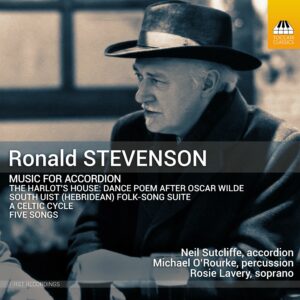
Ronald Stevenson: Music for Accordion
Ronald Stevenson (1928–2015) is best remembered for his huge output of music for the piano, an instrument he played with a rare understanding of tonal colour. It was thus entirely within character that he responded enthusiastically to the opportunity to explore the musical possibilities of the accordion, most impressively in a ‘Dance Poem’ of some scale. Stevenson was also an inveterate transcriber, producing hundreds of piano versions of pieces written for other forces. Neil Sutcliffe here returns the compliment, transcribing one of Stevenson’s own piano works and five of his songs for accordion, pulling the classical world and Scottish traditional music a little closer together.
Neil Sutcliffe, accordion
Michae O’Rourke, percussion
Rosie Lavery, soprano
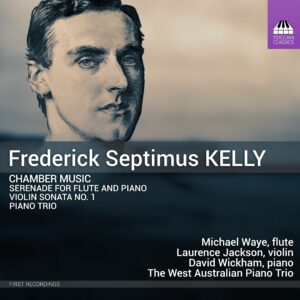
Frederick Septimus Kelly: Chamber Music
Frederick Septimus Kelly, born in Sydney in 1881, was on the way to becoming one of Australia’s most important early composers when he was killed during the Battle of the Somme in 1916. The three works recorded here – for the first time – underline just how grievous was that loss, not only for Australia but for the musical world more generally. Kelly’s D minor Violin Sonata is an astonishingly assured work for a twenty-year-old student composer; his Serenade for flute and piano exudes good-natured charm; and the two surviving movements of his Piano Trio – which have a Brahmsian intensity – suggest that he would have been one of the major composers of the twentieth century.
Laurence Jackson, piano
Michael Waye, flute
David Wickham, piano
The West Australian Piano Trio
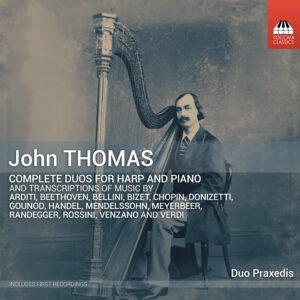
John Thomas: Complete Duos for Harp and Piano
Harpist to Queen Victoria, the Welsh composer John Thomas (1826–1913) also wrote prolifically for his own instrument, both for solo harp and for duos of two harps or harp and piano – a combination where the different sounds of the two instruments enhance the clarity of the texture. Thomas’ original works use the elegant Romantic style of his own day, but he often drew on Welsh folksong for his inspiration and also left a generous legacy of transcriptions, especially of operatic favourites. Although some of his music was intended for the Victorian drawing room, other pieces require a virtuoso technique – and all of it has a thoroughly engaging melodic appeal.
Duo Praxedis
5 CD Box Set Includes:
TOCC0561 – John Thomas: Complete Duos for Harp and Piano, Vol. 1
TOCC0566 – John Thomas: Complete Duos for Harp and Piano, Vol. 2
TOCC0578 – John Thomas: Complete Duos for Harp and Piano, Vol. 3
TOCC0582 – John Thomas: Complete Duos for Harp and Piano, Vol. 4
TOCC0711 – John Thomas: Complete Duos for Harp and Piano, Vol. 5
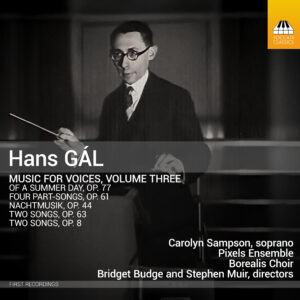
Hans Gál: Music for Voices, Volume Three
Whether in his original home of Vienna, as a conservatoire director in Mainz, or as an émigré in Edinburgh, where he became one of the mainstays of musical life, Hans Gál (1890–1987) championed choral singing as a way of directly involving people in making music: he founded and conducted a number of choirs and provided an extensive output of choral compositions. This third album of his choral music offers a vivid cross-section of music for chamber choir, featuring mixed voices, women’s voices and male-voice choir, a cappella, with solo soprano, with piano and with chamber accompaniment.
Carolyn Sampson, soprano
Pixels Ensemble
Borealis Choir
Bridget Budge, director
Stephen Muir, director
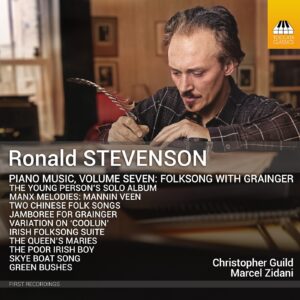
Ronald Stevenson: Piano Music, Volume Seven – Folksongs with Grainger
Percy Grainger (1882–1961) and Ronald Stevenson (1928–2015), both composer-pianists of the Golden Age of keyboard virtuosity, shared a passion for folksong, especially the modal Celtic melodies from the fringes of the British Isles. Though the two never met, they corresponded for many years, with Stevenson arranging many of Grainger’s transcriptions in a deliberate act of homage to the older man, whose quirky originality brought Stevenson illumination on his own idiosyncratic path. This seventh instalment in Christopher Guild’s Toccata Classics survey of Stevenson’s piano music uncorks the exultant good humour that he and Grainger found on that common Celtic ground.
Christopher Guild, piano
Marcel Zidani, piano
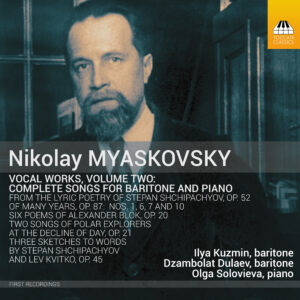
Nikolay Myaskovsky: Vocal Works, Volume Two: Complete Songs for Baritone and Piano
Nikolay Myaskovsky (1881–1950) was given the sobriquet of ‘the conscience of Russian music’ thanks to his dignified bearing and quiet wisdom – qualities reflected in the unemphatic strength of his music. His orchestral, chamber and instrumental works are regaining the currency they once enjoyed, but his large corpus of songs, many of them understated masterpieces, has yet to attract systematic attention – a situation this series hopes to remedy. This second album presents his entire output of songs for baritone and piano, most of them early works responding to Russian lyric poetry with the calm dignity typical of his compositions – though there is the occasional flash of passion.
Ilya Kuzmin, baritone
Dzambolat Dulaev, baritone
Olga Solovieva, piano
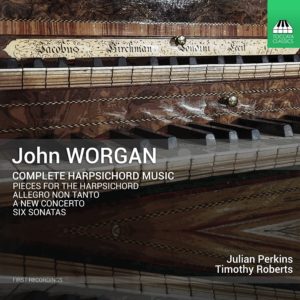
John Worgan: Complete Harpsichord Music
The organist and harpsichordist John Worgan (1724–90) was one of the most highly respected musicians in the London of his day: Handel admired his playing, and Burney described him as ‘very masterly and learned’. All that survives of his harpsichord music are a ‘New Concerto’, an independent Allegro non tanto and two collections, one of six sonatas and the other of thirteen teaching pieces, but they encompass an eclectic variety of styles and a surprising range of emotions – proud, spirited, witty, impulsive, touching, vivacious – making Worgan sound something like an English Domenico Scarlatti.
Julian Perkins, double-manual harpsichord from the workshop of Jacobus Kirckman, 1772 (Tracks 1–15, 29–31)
Timothy Roberts, double-manual harpsichord by Klaus Ahrend, 1973, after Dulcken (Tracks 16–28)
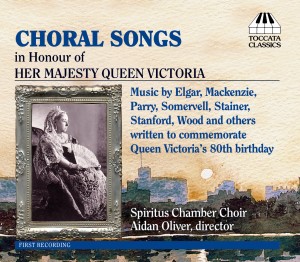
Choral Songs in honour of Her Majesty Queen Victoria
In celebration of Queen Victoria’s 80th birthday in 1899, thirteen of the leading composers and poets of the day collaborated on a collection of partsongs to rival their Elizabethan model, The Triumphs of Oriana. Published in a limited edition of only 100 copies, this superb sequence, studded with musical gems, provides a fascinating snapshot of the British musical renaissance on the eve of the twentieth century.
Spiritus Chamber Choir, choir
Aidan Oliver, director
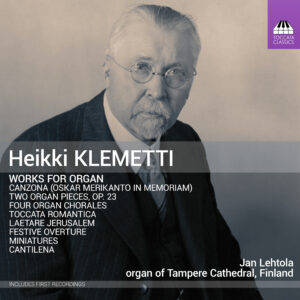
Heikki Klemetti: Organ Music
Heikki Klemetti (1876–1953) was one of the most important figures in the Finnish music of his day: author, organiser, musicologist, editor, educator, folksong collector and, above all, choral composer. His work as an organist and composer for the organ has largely been forgotten, an omission this first-ever album of his organ music seeks to correct. The influence of Ostrobothnian folksong can readily be heard, and there are obvious points of contact with the musical language of Sibelius, not least in the unemphatic dignity and nobility of the style, with the modal harmonies occasionally calling to mind another of Klemetti’s contemporaries: Vaughan Williams.
Jan Lehtola, organ of Tampere Cathedral, Finland
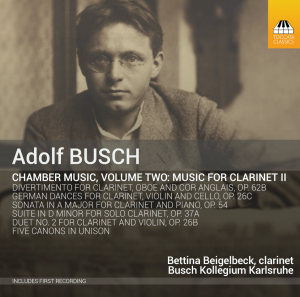
Adolf Busch: Chamber Music, Volume Two: Music for Clarinet II
Adolf Busch (1891–1952) enjoys a reputation as one of the greatest of all violinists: his recordings of Beethoven with the Busch Quartet have never been surpassed. But Busch was also one of the major composers of his day, equally natural as contrapuntist and melodist, with a style that owed much to his boyhood idol, Max Reger. Yet, always a man of principle, he sacrificed his career as both violinist and composer with his dignified refusal to perform or be performed in Nazi Germany. This second CD of his lyrical writing for clarinet, one in a series of recordings of Busch’s light-filled chamber music, is part of the rediscovery of one of the leading musicians of his day.
Bettina Beigelbeck, clarinet; Busch Kollegium Karlsruhe
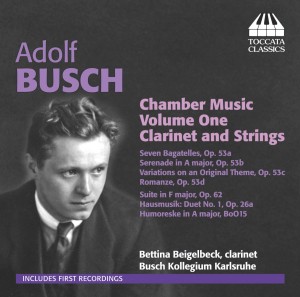
Adolf Busch: Chamber Music, Volume One
Adolf Busch (1891-1952) enjoys a reputation as one of the greatest of all violinists: his recordings of Beethoven with the Busch Quartet have never been surpassed. But Busch was also one of the major composers of his day, equally natural as contrapuntist and melodist, with a style that owed much to his boyhood idol, Max Reger. Yet, always a man of principle, he sacrificed his career as both violinist and composer with his dignified refusal to perform or be performed in Nazi Germany. This CD of his lyrical writing for clarinet, the first in a series of recordings of Busch's light-filled chamber music, is part of the rediscovery of one of the leading musicians of his day.
Bettina Beigelbeck, clarinet
Busch Kollegium Karlsruhe
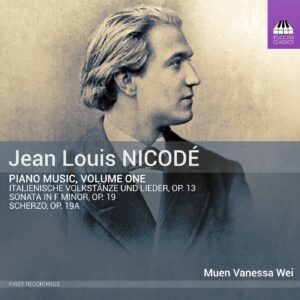
Jean Louis Nicodé: Piano Music, Vol. 1
As pianist, conductor and composer, Jean Louis Nicodé (1853-1919) was one of the most highly respected musicians of his day. Born in Posen in Prussia (Poznań in present day Poland), he became a stalwart of musical life in Dresden in the closing years of the nineteenth century. Today his name is as good as unknown, with his music suffering the same fate as his reputation as a performer – although he was a highly accomplished composer. HIs piano music has hints of Chopin, Liszt and Schumann, and the spirit of dance is never far from the surface, but his expansive, and only, piano sonata has a visionary quality with its origins in late Beethoven.
Muen Vanessa Wei, piano
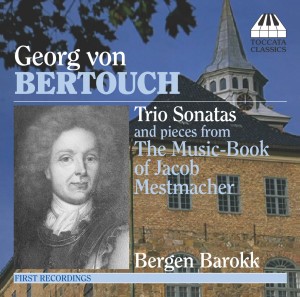
Georg von Bertouch: Trio Sonatas and pieces from The Music Book of Jacob Mestmacher
Georg von Bertouch (1668–1743) was a man of action, quite literally: he took part in no fewer than 22 battles, and ended his career as commandant of Akershus Castle, which still overlooks the harbour in Oslo – the portrait on the cover of this CD was photographed in the office of the present-day commandant. But Bertouch, a German-born Norwegian, was also one of the leading composers of the day, corresponding with Bach and other prominent musicians. His music reveals a knowledge of Corelli and other contemporary developments, but retains a fresh, almost innocent, spontaneity with an infectious appeal. Here it is interspersed with dances and airs used in domestic music-making in Baroque Bergen.
Bergen Barokk
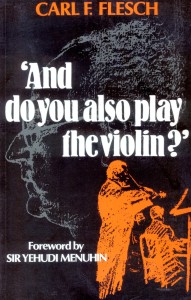
‘And do you also play the violin?’
Foreword by Sir Yehudi Menuhin
Extant: 382
Composition: Demy octavo ~ Profusely illustrated with facsimiles and photographs ~ Index
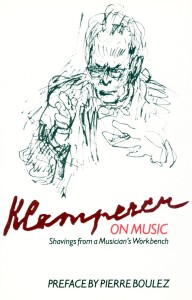
Klemperer on Music: Shavings from a Musician’s Workbench
Preface by Pierre Boulez
Edited by Martin Anderson
Illustrations by Cosman, Topolski, Kirchner and 16 others
Extant: 246
Composition: Demy octavo ~ Illustrated ~ List of Klemperer's Compositions
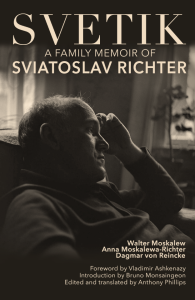
SVETIK: A Family Memoir of Sviatoslav Richter
Walter Moskalew, Anna Moskalewa-Richter and Dagmar von Reincke
Foreword by Vladimir Ashkenazy
Introduction by Bruno Monsaingeon
Translated and edited by Anthony Phillips
Extent: 462 pages
Size: 16 x 24 cm
Published: October 2015
Illustrations: c. 30 colour illustrations; c. 250 b/w illustrations